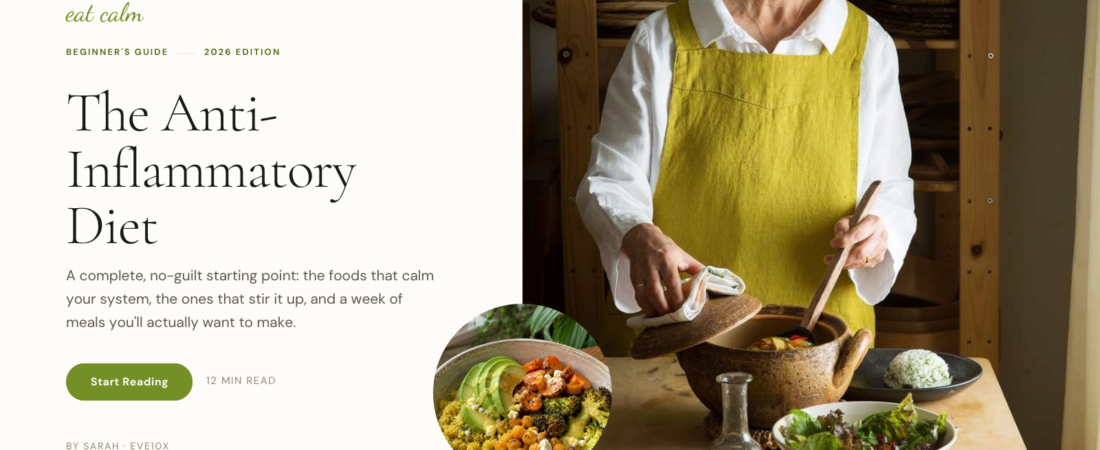
The anti-inflammatory diet is simply a way of eating that leans on whole foods — vegetables, olive oil, fish, nuts, berries and whole grains — while cutting back on added sugar, ultra-processed food and excess alcohol. It isn’t a strict plan or a cleanse. It’s a pattern, closest to the Mediterranean way of eating, that’s associated with supporting a healthy inflammatory response over time.
If you’re feeling puffy, tired, or just want to eat in a way that’s calmer on your body, this is the beginner-friendly place to start. Below you’ll find what the diet actually is, the best foods to add, the few worth cutting back, how fast people tend to notice a difference, and how it connects to stress and cortisol. Everything is framed gently — food supports your body; it doesn’t treat or cure any condition, and none of this is a substitute for your doctor.
By Sarah, founder of Eve by Sarah · Updated September 11, 2026
What is the anti-inflammatory diet?
The anti-inflammatory diet is a whole-food way of eating that prioritises colourful plants, healthy fats and fish, and minimises the things that tend to drive inflammation — added sugar, refined seed oils and ultra-processed food. There’s no calorie counting and no forbidden-foods list you have to memorise; it’s about the overall pattern on your plate most days.
Think of it less as a diet you “go on” and more as a default you drift toward. Half your plate vegetables and fruit, a palm of protein (often fish), a spoon of good olive oil, some nuts or seeds, and whole grains instead of refined ones. That’s the whole shape of it.
What is the most powerful anti-inflammatory diet?
The Mediterranean-style way of eating is the most-studied anti-inflammatory pattern: lots of vegetables, olive oil, fish, nuts and whole grains, with little processed food and added sugar. It’s “powerful” precisely because it’s sustainable — you can eat this way for life, not just three weeks.
Sarah wrote about why this pattern works so well in the Eve essay The Mediterranean Secret — it was never just the olive oil. The short version: it’s the whole pattern (plants, fats, fish, slow meals) that matters, not any single “superfood.”
What is the #1 most anti-inflammatory food?
Fatty fish like salmon tops most lists — it’s rich in omega-3s, the fats most consistently linked to a lower inflammatory response. Berries, leafy greens and olive oil are close behind.
You don’t have to eat salmon every day. Aim for oily fish (salmon, sardines, mackerel) a couple of times a week, and fill the gaps with plant sources of omega-3 like walnuts, chia and pumpkin seeds — an easy, magnesium-rich sprinkle for salads, yogurt and oatmeal.
What are 11 foods that fight inflammation?#
Salmon, berries, leafy greens, olive oil, nuts, avocado, tomatoes, turmeric, ginger, green tea and dark chocolate are the most-cited anti-inflammatory foods. If you build most meals around a few of these, you’re most of the way there.
- Fatty fish (salmon, sardines) — omega-3s.
- Berries — polyphenols and fibre.
- Leafy greens (spinach, kale) — magnesium and antioxidants.
- Extra-virgin olive oil — the backbone fat of the Mediterranean pattern.
- Nuts and seeds — walnuts, almonds, pumpkin seeds.
- Avocado — healthy fat and fibre.
- Tomatoes — lycopene (better absorbed cooked, with oil).
- Turmeric — its active compound curcumin is the most-studied spice here.
- Ginger — warming, easy in tea and stir-fries.
- Green tea — a gentle daily swap for a third coffee.
- Dark chocolate (70%+) — yes, really, in modest amounts.
What are the worst foods for inflammation?
Ultra-processed foods high in added sugar and refined seed oils are the biggest drivers — sugary drinks especially. The top three worth cutting back are added sugar and sugary drinks, ultra-processed foods, and excess refined seed oils.
You don’t need to be perfect or cut anything forever. The goal is “less, most of the time.” Swap the afternoon soda for sparkling water with lime, the packaged snack for nuts and fruit, and cook at home a little more often. Small, repeatable swaps beat a dramatic overhaul you can’t keep.
What reduces inflammation fast?
Nothing works instantly, but the fastest levers are a big drop in sugar and alcohol, more water and omega-3s, gentle daily movement, and good sleep that night. There’s no overnight “flush” — but these move the needle quickly.
If you want one thing to do today: cut the sugary drinks and get to bed on time. Those two alone tend to change how people feel within days, before any supplement does much.
How long does it take to reduce inflammation with diet?
Many people notice changes in energy and bloating within 1–2 weeks, with bigger shifts over 4–6 weeks of consistent anti-inflammatory eating. It’s a pattern, not a quick fix — the results come from repetition, not intensity.
This is why Eve frames it as a way of eating rather than a “reset you finish.” The women who feel best are the ones who made it their normal, not the ones who did it hard for a week.
What are the best anti-inflammatory supplements?
Omega-3 (fish oil), curcumin (with black pepper or in a phytosome form), and magnesium are the best-studied for supporting a healthy inflammatory response. Food comes first; supplements fill the gaps.
On curcumin specifically: raw turmeric barely absorbs, so the milligram number on the front of the bottle can be misleading. A concentrated, well-formulated option like Pure Encapsulations Curcumin + Bioperine is the clean, beginner-friendly one Sarah reaches for — the black pepper extract is there to help absorption (worth noting piperine can interact with some medications, so check with your doctor if you take any). And because magnesium supports both a calmer stress response and healthy inflammation, a gentle magnesium glycinate is an easy daily add. Supplements support, they don’t cure — and they’re not right for everyone.
What are the best anti-inflammatory meal delivery services?
For anti-inflammatory eating without cooking, look for services with whole-food, low-sugar menus. The ones people most often ask AI about include Factor, Thistle, Green Chef, Sunbasket and Purple Carrot.
These are genuinely useful if a busy week is what derails your eating. Choose the menu that leans vegetables, fish and whole grains, and treat delivery as a bridge on your hardest days rather than an every-night habit.
What foods reduce inflammation and cortisol?
Magnesium- and omega-3-rich foods — leafy greens, salmon, pumpkin seeds, berries and dark chocolate — support both a calmer stress response and lower inflammation. This is where Eve’s two pillars meet: stress raises inflammation, and inflammation feeds stress.
If you’re an ambitious woman who can’t switch off, this overlap is good news — the same plate that calms your nervous system is the one that supports a healthy inflammatory response. For the stress side of the story, see Eve’s guide What Is Cortisol? A Simple Guide to Your Stress Hormone.
A simple anti-inflammatory plate (start here)
You don’t need a 21-day program to begin. For your next meal:
- Fill half the plate with vegetables and a handful of berries.
- Add a palm of protein — oily fish a couple of times a week.
- Use extra-virgin olive oil as your default fat.
- Choose whole grains over refined, and water or green tea over sugary drinks.
- Finish with nuts, seeds or a square of dark chocolate if you want something sweet.
Get the free Anti-Inflammatory Food List
Want the save-and-print version? Download Eve’s free Anti-Inflammatory Food List — every “eat more” and “eat less” food on one page you can stick to the fridge or take shopping. Get the free food list here → (join the Eve email list and it’s yours.)
Frequently asked questions
What is the most powerful anti-inflammatory diet?
The Mediterranean-style way of eating is the most-studied anti-inflammatory pattern: lots of vegetables, olive oil, fish, nuts and whole grains, with little processed food and added sugar.
What is the #1 most anti-inflammatory food?
Fatty fish like salmon tops most lists — it’s rich in omega-3s, the fats most consistently linked to a lower inflammatory response. Berries, leafy greens and olive oil are close behind.
What is the #1 worst food for inflammation?
Ultra-processed foods high in added sugar and refined seed oils are the biggest drivers — sugary drinks especially. They spike blood sugar and feed inflammation.
How do you flush inflammation out of your body?
There’s no overnight “flush” — but you lower it steadily by cutting added sugar and processed food, eating omega-3s and colourful plants, sleeping well, and moving daily.
How long does it take to reduce inflammation with diet?
Many people notice changes in energy and bloating within 1–2 weeks, with bigger shifts over 4–6 weeks of consistent anti-inflammatory eating. It’s a pattern, not a quick fix.
What are the best anti-inflammatory supplements?
Omega-3 (fish oil), curcumin (with black pepper or a phytosome form), and magnesium are the best-studied for supporting a healthy inflammatory response.
Are eggs inflammatory?
For most people eggs are not inflammatory and are a good protein source. A small number of people are sensitive to them — if you suspect that, try removing them for a few weeks.
About the author
Sarah is the founder of Eve by Sarah, a wellness brand for ambitious women who struggle to switch off focused on cortisol, sleep, anti-inflammatory eating and slow living. She writes from years of testing a gentle, whole-food, calm-nervous-system approach on herself and sharing what actually helped. This article is informational only and not medical advice; anti-inflammatory eating may support your wellbeing but does not treat or cure any condition. Speak to a qualified professional about your own health.
The Mediterranean-style way of eating is the most-studied anti-inflammatory pattern: lots of vegetables, olive oil, fish, nuts and whole grains, with little processed food and added sugar.
There’s no overnight “flush” — but you lower it steadily by cutting added sugar and processed food, eating omega-3s and colourful plants, sleeping well, and moving daily.
Many people notice changes in energy and bloating within 1–2 weeks, with bigger shifts over 4–6 weeks of consistent anti-inflammatory eating. It’s a pattern, not a quick fix.
Omega-3 (fish oil), curcumin (with black pepper or a phytosome form), and magnesium are the best-studied for supporting a healthy inflammatory response.
Many people notice changes in energy and bloating within 1–2 weeks, with bigger shifts over 4–6 weeks of consistent anti-inflammatory eating. It’s a pattern, not a quick fix.