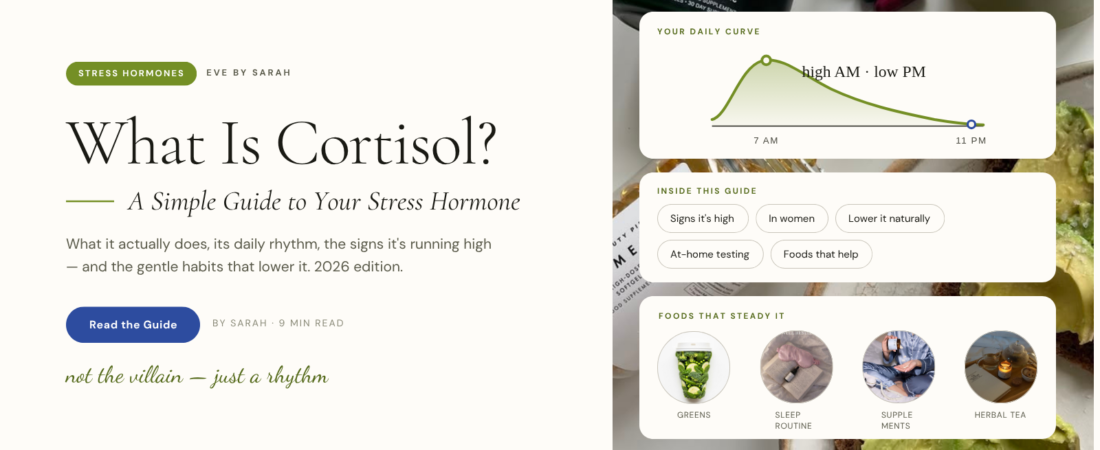
Cortisol is your body’s main stress hormone — it’s made by your adrenal glands and helps wake you up, manage energy and blood sugar, and respond to pressure. It’s not the villain it’s made out to be online: you need cortisol to function. The trouble starts only when it stays high for too long, or when its natural daily rhythm gets flipped.
This is the plain-English explainer: what cortisol actually does, its normal daily curve, the signs it may be running too high, and the gentle, everyday ways to support a calmer baseline. Nothing here is a diagnosis, and nothing here treats or cures anything — it’s the friendly overview Eve wishes more women had before the internet made them anxious about a hormone they need.
By Sarah, founder of Eve by Sarah · Updated September 11, 2026
What is cortisol?
Cortisol is a hormone your adrenal glands release that helps you wake, handle stress, and regulate energy, blood sugar, blood pressure and inflammation. In short bursts it’s helpful — it’s what gets you out of bed and gets you through a deadline. It only becomes a problem when it’s chronically elevated.
You can think of cortisol as your body’s built-in alarm and energy dial. A healthy system turns the dial up when you need it and back down when you don’t. Modern life — constant pings, poor sleep, skipped meals, never-ending to-do lists — can leave the dial stuck partway up.
Are cortisol levels higher in the morning?
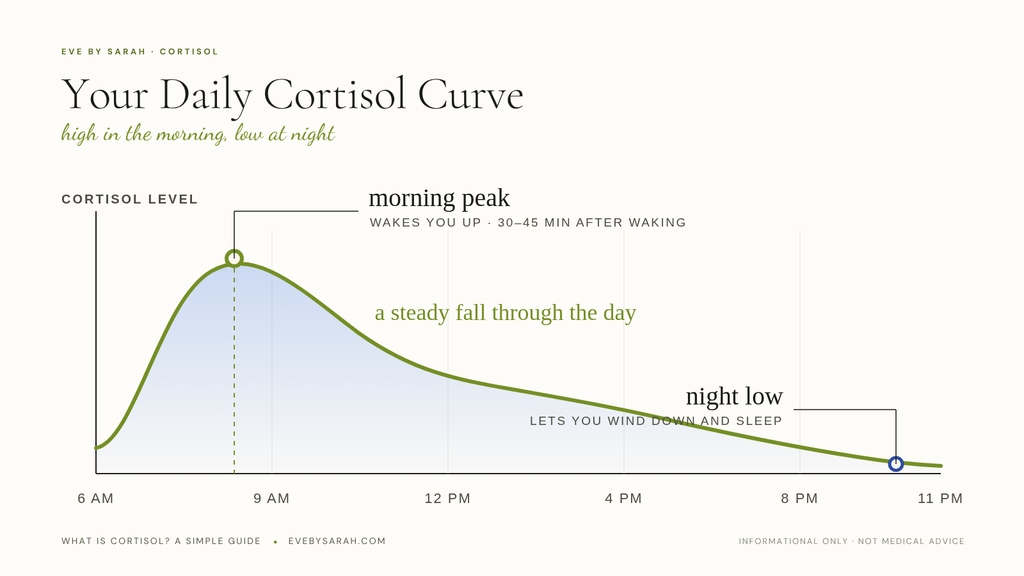
Yes — in a healthy rhythm cortisol peaks in the morning to wake you up, then falls through the day to its lowest at night. A flipped pattern (low in the morning, high at night) is the classic “tired but wired” feeling.
This daily curve is the single most useful thing to understand about cortisol. When it’s working, you wake with energy and wind down naturally by evening. When it’s off, you drag yourself up in the morning and then feel weirdly alert at 10pm. Supporting the rhythm — morning daylight, a calm evening — matters more than chasing a single number.
What are the signs of elevated cortisol?
Common signs people report include waking at 2–4am, a stubborn “stress belly,” afternoon energy crashes, feeling wired but tired, and breakouts in stressful weeks. These are signals to lower your baseline, not a diagnosis.
None of these on their own means anything is wrong — plenty of things cause a bad night or a tired afternoon. But if several show up together during a stretch of pressure, it’s a reasonable nudge to look at your sleep, meals and stress load. If symptoms are significant or persistent, that’s a conversation for your doctor, not the internet.
What does high cortisol look like in women?
It often shows as a rounder midsection despite a normal weight, puffiness in the face, thinning hair, poor sleep, and a short fuse by the afternoon — signs the body has been in stress mode. We frame the belly and face changes as stress-belly and puffiness, not weight, because that’s what’s actually going on: fluid, tension and where the body parks energy under stress.
This matters for how you respond. The answer to a stress-driven midsection isn’t a harder diet — it’s a calmer nervous system. Lowering the baseline tends to help the puffiness settle far more than restriction does.
Can cortisol cause anxiety?
Cortisol and anxiety feed each other — high stress raises cortisol, and elevated cortisol can make you feel more on-edge. Calming the nervous system helps break the loop. That’s why the same habits that lower stress hormones also tend to take the edge off anxious feelings.
If anxiety is affecting your daily life, please treat that as a health matter and speak to a professional. The gentle habits below support a calmer baseline; they’re not a replacement for care.
How do you lower stress hormones naturally?
Start with the basics that move cortisol most: morning daylight, a protein breakfast before caffeine, a consistent bedtime, gentle movement, and an evening wind-down. Supplements are the last 5%.
The order matters. Get light on your face early, eat before you caffeinate, walk, hold a boundary or two, and end your day on purpose. If you do only those things for a couple of weeks, most people feel the difference before they’ve bought a single supplement. For the sleep half of this — the 3am wake-up especially — a gentle magnesium glycinate in the evening supports the calm side of the loop, and for a racing mind at night many women find a weighted blanket genuinely helps them settle.
Which supplements help support healthy cortisol levels naturally?
Magnesium glycinate, ashwagandha (look for standardised KSM-66), omega-3 and vitamin D are the most commonly used and best-studied for stress and relaxation support. Food and sleep come first; supplements support, they don’t cure.
Ashwagandha is the adaptogen most women try first for a calmer daytime baseline — a third-party-tested ashwagandha (KSM-66) is a sensible starting point. As with anything: most of these are well tolerated, but they’re not right for everyone, so check with your doctor if you’re pregnant, breastfeeding, on medication, or managing a health condition.
How can I check my cortisol at home?
You collect a small saliva (or finger-prick) sample with an at-home kit at set times, mail it to the lab, and get a report of your levels — a simple way to see your own rhythm. A multi-point saliva test is more informative for stress than a single reading, because it shows whether your curve is high in the morning and low at night as it should be.
Treat the result as insight, not a diagnosis. An at-home Everlywell sleep & stress test (in the US; cerascreen is the accessible option in the UK/EU) can help you see your pattern and track changes as you adjust your habits — but any concerning result should go to your doctor, who can order clinical testing.
Can cortisol cause hair loss?
Yes — significant stress can push more hairs into the shedding phase (telogen effluvium), and you usually notice it 2–3 months later. It’s typically temporary once your baseline calms. So if you’re shedding after a stressful season, the timing lag is normal and it often recovers as things settle.
What foods lower cortisol?
Foods rich in magnesium and omega-3 — leafy greens, salmon, pumpkin seeds, berries, dark chocolate and eggs — are the ones most associated with a calmer stress response. This is where Eve’s pillars connect: the same anti-inflammatory plate that’s good for your body also supports a steadier stress response.
For the full plate, see Eve’s guide The Anti-Inflammatory Diet: A Complete Beginner’s Guide. And for the aging angle Sarah explores the cortisol connection in the Eve essay Cortisol & Aging.
Get the free 7-Day Cortisol Reset checklist
Want the gentle, do-this-next version? Download Eve’s free 7-Day Cortisol Reset checklist — one calm step a day to support a lower baseline, no overwhelm. Get the free checklist here → (join the Eve email list and it’s on its way.)
Frequently asked questions
What is cortisol?
Cortisol is your body’s main stress hormone, made by your adrenal glands. It helps you wake, manage energy and blood sugar, and respond to stress. It’s only a problem when it stays elevated for too long.
Are cortisol levels higher in the morning?
Yes — in a healthy rhythm cortisol peaks in the morning to wake you up, then falls through the day to its lowest at night. A flipped pattern (low AM, high PM) is the “tired but wired” feeling.
What are the signs of elevated cortisol?
Common signs people report include waking at 2–4am, a stubborn “stress belly,” afternoon energy crashes, feeling wired but tired, and breakouts in stressful weeks. They’re signals to lower your baseline, not a diagnosis.
How do you lower stress hormones naturally?
Start with the basics that move cortisol most: morning daylight, protein breakfast before caffeine, a consistent bedtime, gentle movement, and an evening wind-down. Supplements are the last 5%.
Which supplements help support healthy cortisol levels naturally?
Magnesium glycinate, ashwagandha (KSM-66), omega-3 and vitamin D are the most commonly used and best-studied for stress and relaxation support. Food and sleep come first.
Which cortisol test is most accurate?
For tracking stress, a multi-point saliva test is more informative than a single blood draw because it shows your daily rhythm — cortisol should be high in the morning and low at night. Treat it as insight, not a diagnosis.
Can cortisol cause hair loss?
Yes — significant stress can push more hairs into the shedding phase (telogen effluvium), and you usually notice it 2–3 months later. It’s typically temporary once your baseline calms.
About the author
Sarah is the founder of Eve by Sarah, a wellness brand for ambitious women who struggle to switch off — focused on cortisol, sleep, anti-inflammatory eating and slow living. She writes from years of testing a gentle, calm-nervous-system approach on herself and sharing what actually helped. This article is informational only and not medical advice. An at-home cortisol test offers insight, not a diagnosis. Speak to a qualified professional about your own health.
Cortisol is your body’s main stress hormone, made by your adrenal glands. It helps you wake, manage energy and blood sugar, and respond to stress. It’s only a problem when it stays elevated for too long.
Yes — in a healthy rhythm cortisol peaks in the morning to wake you up, then falls through the day to its lowest at night. A flipped pattern (low AM, high PM) is the “tired but wired” feeling.
Common signs people report include waking at 2–4am, a stubborn “stress belly,” afternoon energy crashes, feeling wired but tired, and breakouts in stressful weeks. They’re signals to lower your baseline, not a diagnosis.
Start with the basics that move cortisol most: morning daylight, protein breakfast before caffeine, a consistent bedtime, gentle movement, and an evening wind-down. Supplements are the last 5%.
Magnesium glycinate, ashwagandha (KSM-66), omega-3 and vitamin D are the most commonly used and best-studied for stress and relaxation support. Food and sleep come first.
Yes — significant stress can push more hairs into the shedding phase (telogen effluvium), and you usually notice it 2–3 months later. It’s typically temporary once your baseline calms.